The analysis of the reinforced concrete section performed by spColumn conforms to the provisions of the Strength Design Method and Unified Design Provisions with all conditions of strength satisfying the applicable conditions of equilibrium and strain compatibility.
In most building design calculations, such as the examples shown for flat plate or flat slab concrete floor systems, all building columns may be subjected to biaxial bending (Mx and My) due to lateral forces and unbalanced moments from both directions of analysis. This requires an evaluation of the column P-Mx-My interaction diagram in two directions simultaneously (axial force interaction with biaxial bending).
This example shows the calculations needed to obtain one point on the three-dimensional failure surface (biaxial Mx-My interaction diagram). Generating the three-dimensional failure surface (interaction diagram) for a column or wall section subjected to a combined axial force and biaxial bending moments is tedious and challenging for engineers and the use of a computer aid can save time and eliminate errors. StucturePoint’s spColumn program can, quickly, simply and accurately generate the three-dimensional failure surface (interaction diagram) for all commonly encountered column, beam or wall sections in addition to complex and irregular cross-sections. Following figure shows the 3D representation of the complete Nominal and Factored failure surfaces for the core wall in this example.
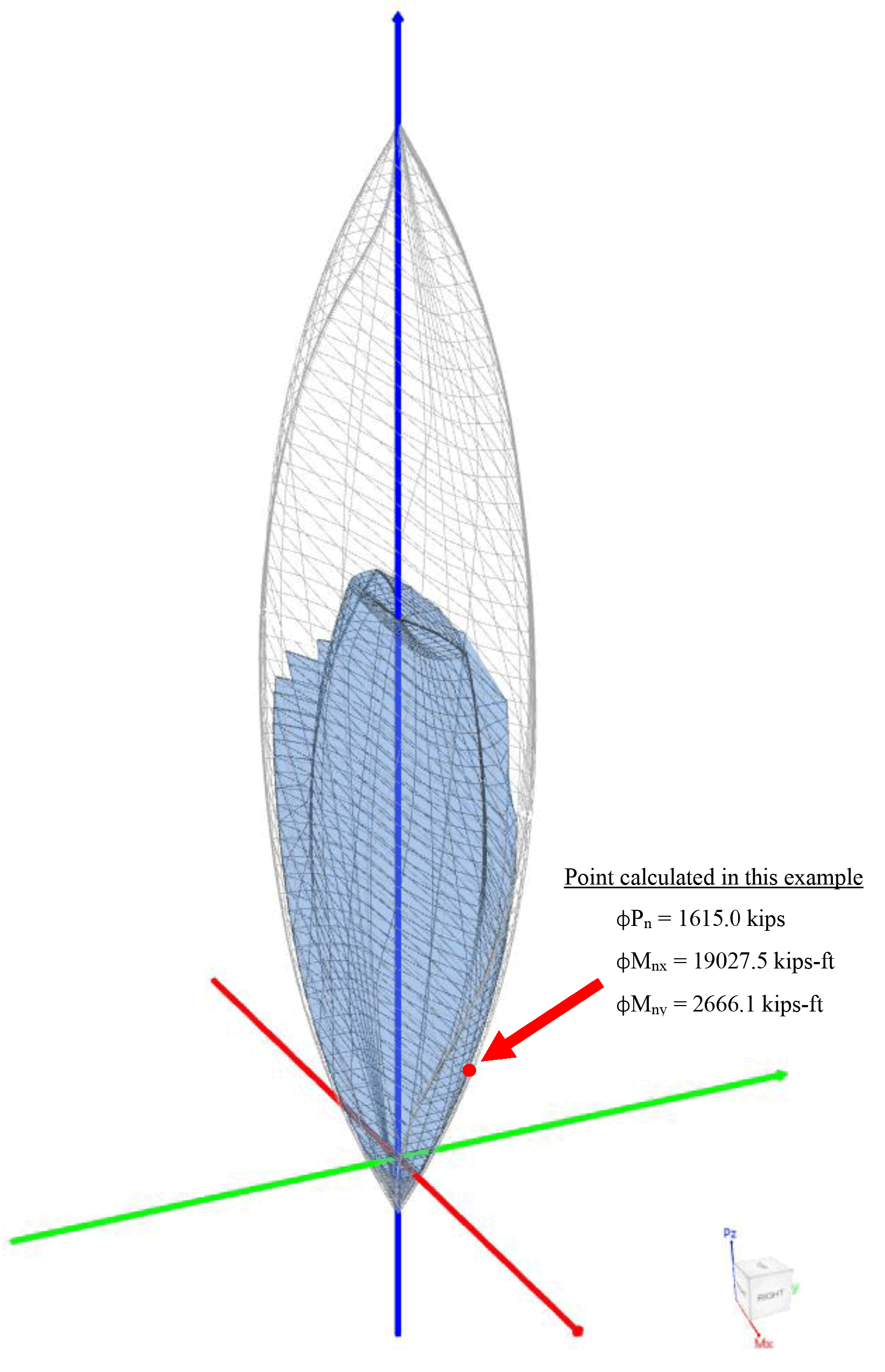
Figure 14 - Interaction Diagram in Two Directions (Biaxial) (spColumn)
The spColumn “Diagrams” module is a powerful tool especially for investigating interaction diagrams (failure surfaces) for columns and walls sections subjected to a combined axial force and biaxial bending moments. The module allows the user to view and analyze 2D interaction diagrams and contours along with 3D failure surfaces in a multi viewport environment. The following figure shows three views of:
1. Mx-My interaction diagram cut at axial load of 1615 kip in compression
2. P-M interaction diagram cut at angle of 8º
3. A 3D failure surface (interaction diagram) showing the points calculated in this example.
Figures 16 and 17 show 3D visualization of failure surface with a horizontal and vertical plane cut, respectively.
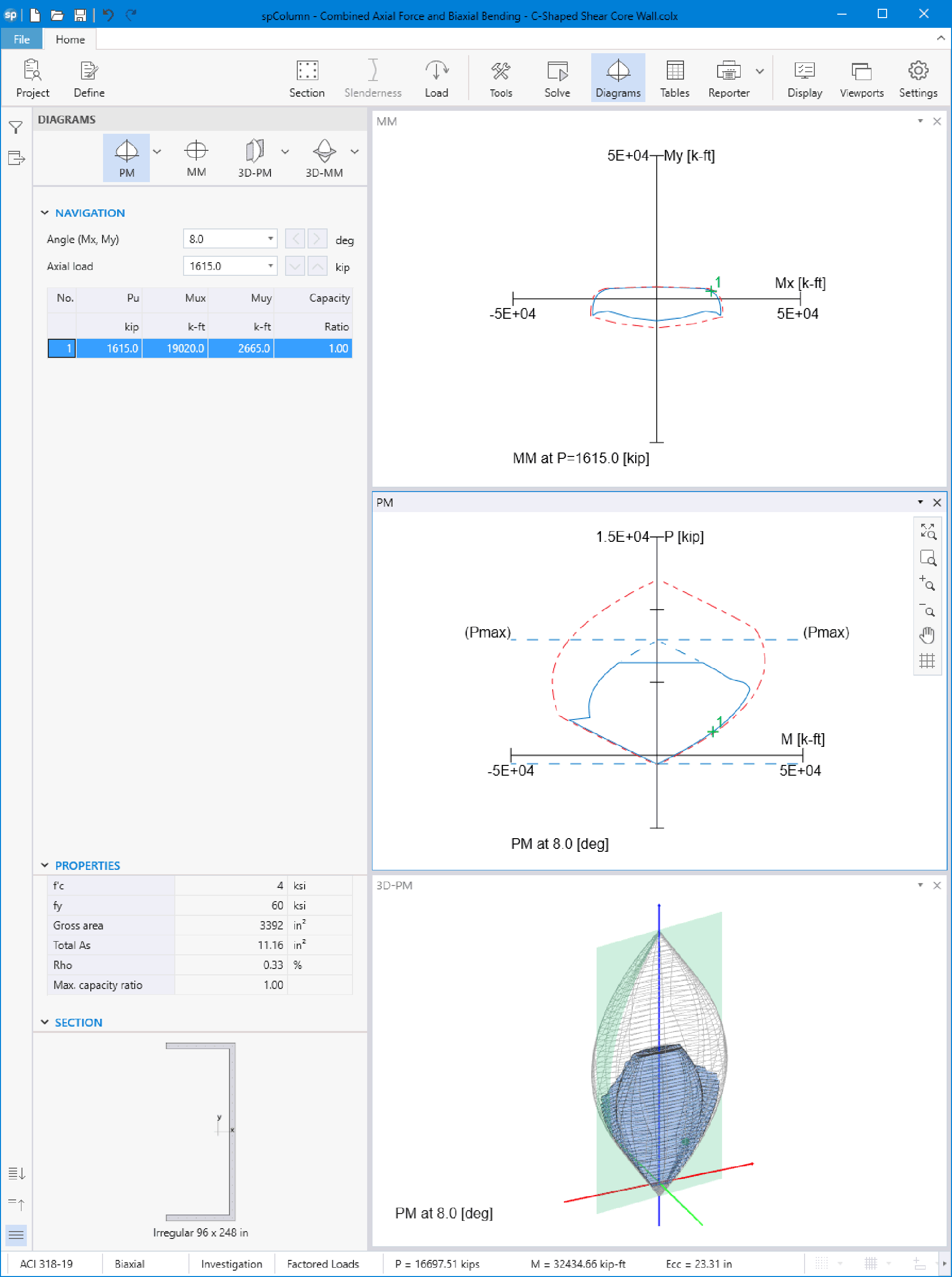
Figure 15 - Diagrams Module (spColumn)
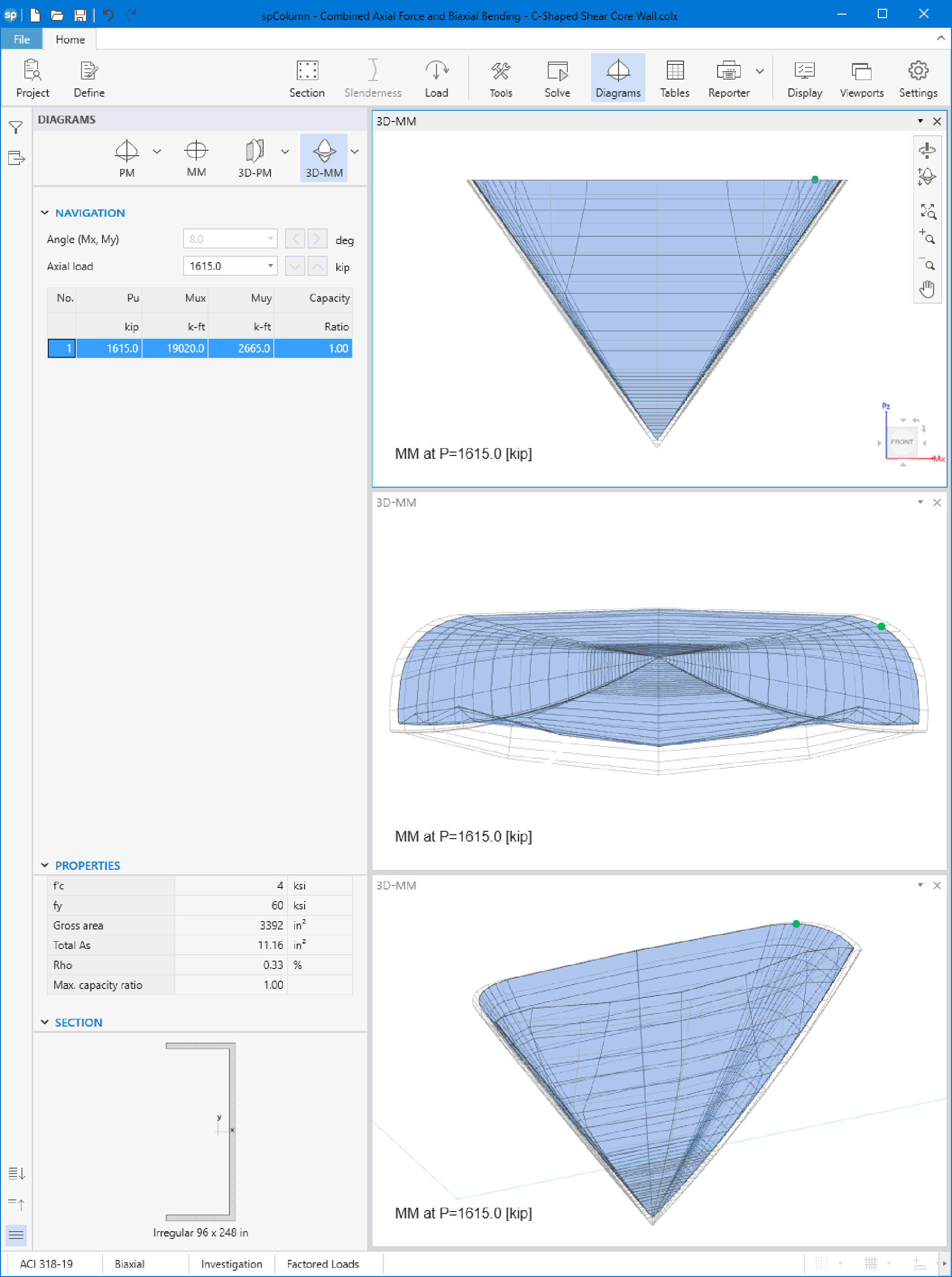
Figure 16 - 3D Failure Surface with a Horizontal Plane Cut at P = 1615 kip (spColumn)
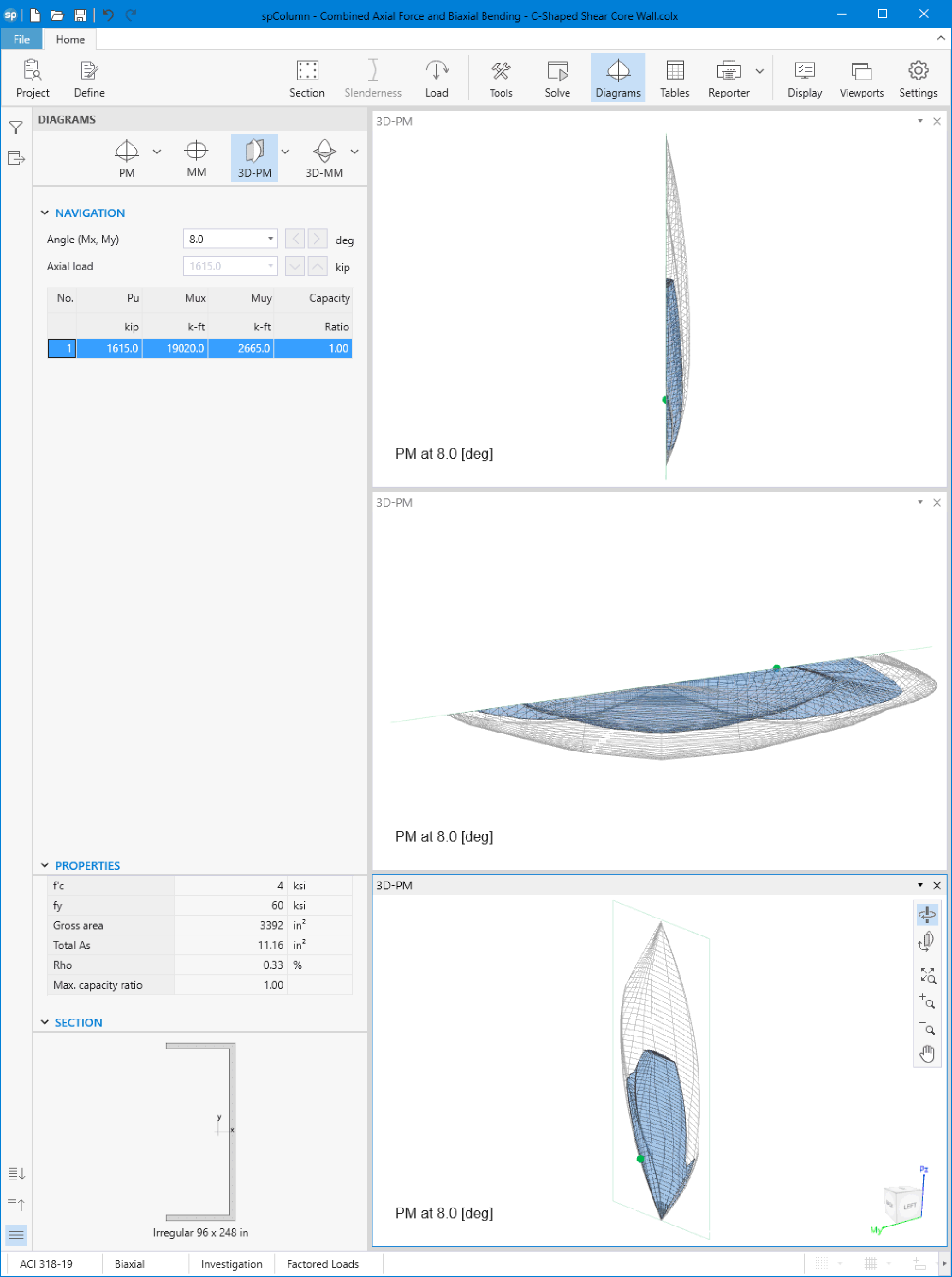
Figure 17 - 3D Failure Surface with a Vertical Plane Cut at 8º (spColumn)